Have you booked yet for 27th October – Viol da gamba and voice from 16th century Venice with Lucine Musaelian and Nathan Giorgetti. If not – book here.
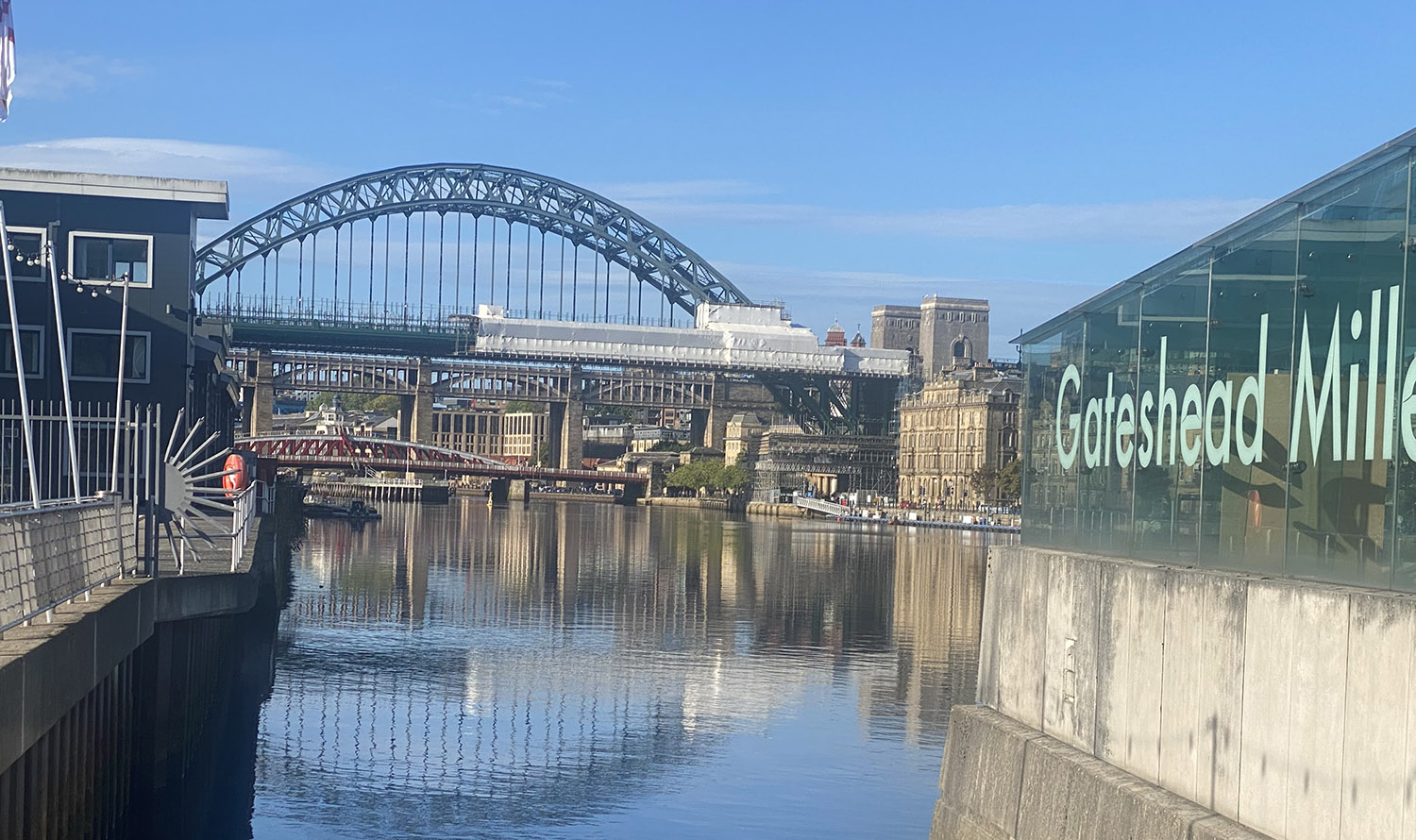 Newcastle’s seven bridges positively sparkled in the sun two weekends ago for the Steve Reich at 90 festival at the Glasshouse. As indeed did the packed festival audience – and the indefatigable Colin Currie and his group. It was Colin, leading exponent of Steve Reich’s music for whom Steve has written many pieces, who had curated the festival and who not only played in every event but was to be found in every available free minute giving insights into the great man’s music.
We went for full immersion over three days but I will not subject you to the same – just pick out some of the more (to a Reich enthusiast) exciting pieces.
A leading light in the minimalist school of the 1960s music scene, Reich’s music is regularly accused of being horribly repetitive and boring. And repetitive it is – but then for Reich it is through repetition that you reach richness. And his repetition is not just repetition. It is repetition that is constantly modulated both rhythmically and harmonically so far from being boring it becomes exciting and often mesmeric.
For those who are interested there is a detailed and fascinating discussion of Reich’s work on this post on the KOLAPSE site and a whole series of articles, videos and interviews relating to Reich’s music on Colin Currie’s site.
Drumming Part 1 is probably one of Reich’s best known pieces played by four players on 8 tuned bongo drums and uses the phasing technique which is at the core of his ‘repetitive’ music. In essence phasing occurs when two players play a repeated pattern together on two similar instruments. Then one player changes tempo slightly so that they are no longer totally in unison with each other. They can go on to get further out of synch often going full circle to come back together in the fullness of time.
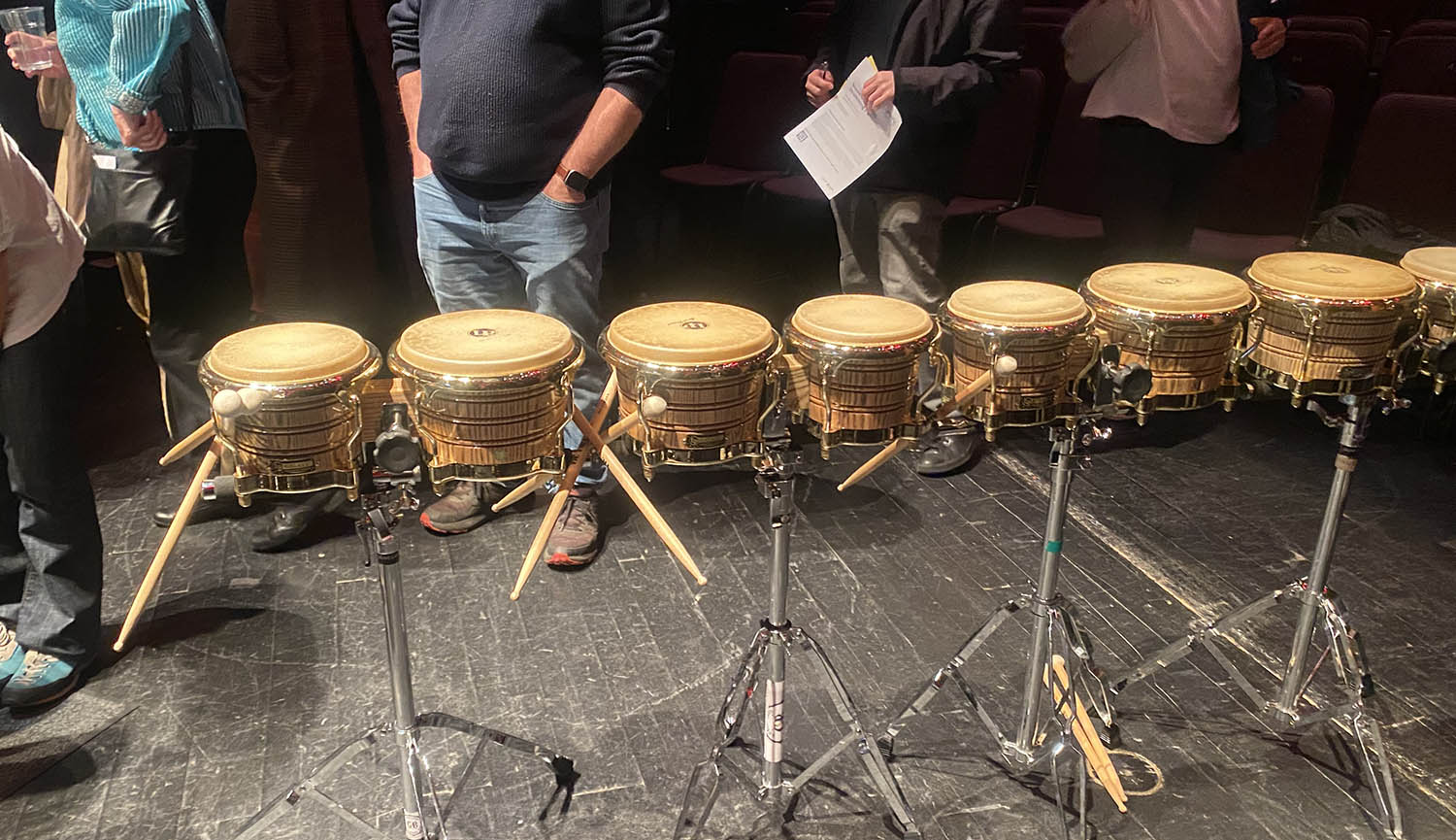
At the festival Drumming was played in Sage 2, an intimate in-the-round performance space where you were in touching distance of the performers and their instruments. Incredibly exciting as the rhythm of Drumming built to its final crescendo. Drumming was followed by Julia Wolfe’s Dark, Full Ride in which crashing cymbals joined the drums.
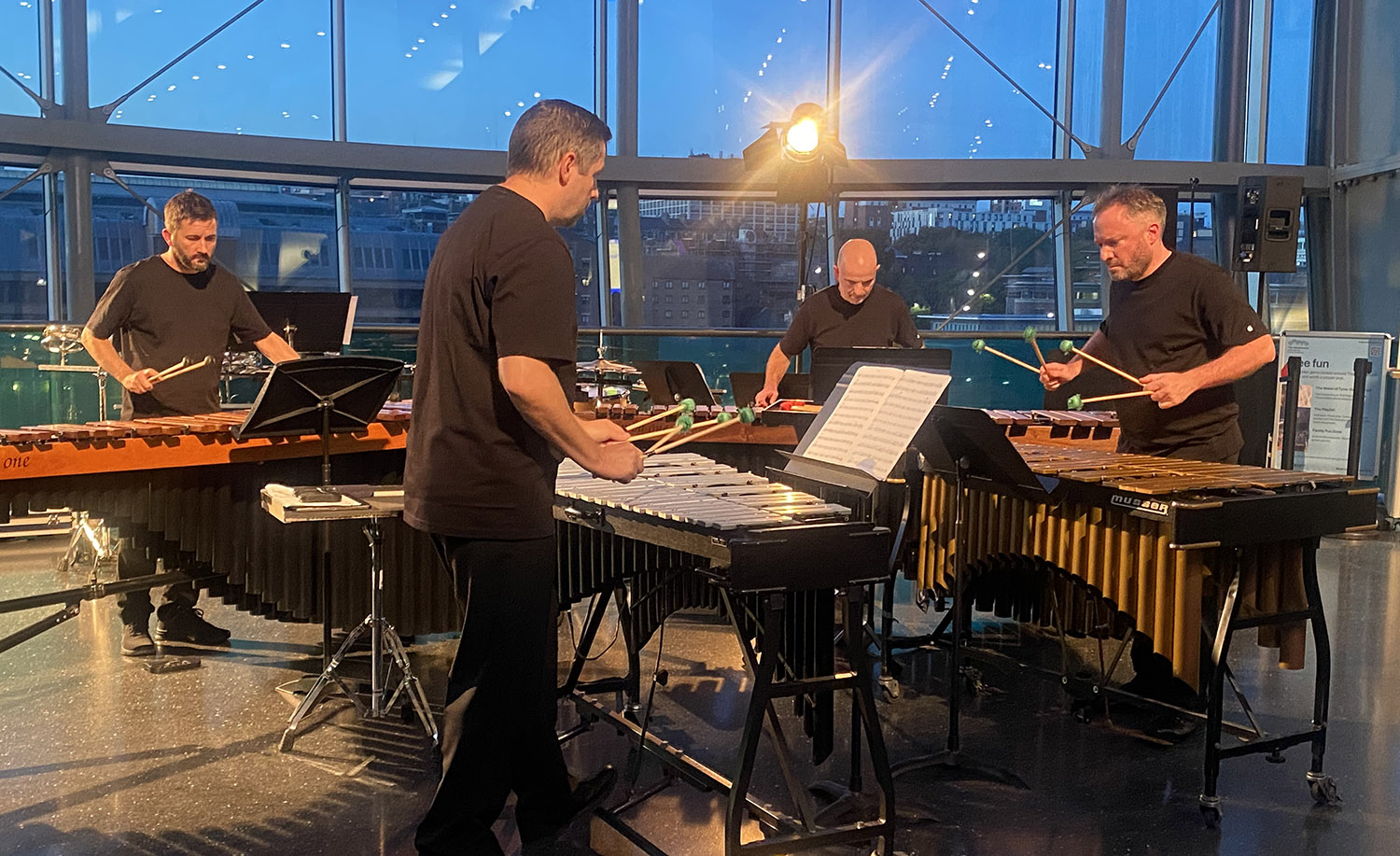
A different sort of drum beating happens in the Mallet Quartet – two marimbas and two vibraphones – which Colin and his core group played in the concourse at the the Glasshouse. The concourse is a great open space which allows anyone who is passing to get involved. And after dark the magic of the Glasshouse’s glorious shell reflects not only all of the lights within the building those glowing across Newcastle.
Music for 18 Musicians was developed by Reich between 1974 and 76 and was a collaborative composition, eventually coming to settle on three marimbas, two xylophones, vibraphone, maracas, violin, cello, two clarinets doubling on bass clarinets, four women’s voices, and four pianos – the clarinets and voices providing an almost drone like undercurrent to the ever changing chords.
(If you are interested in the construction of the piece, take a look at the Composer’s notes on the Boosey and Hawkes page here. )
Music for 18 Musicians was played in the main Sage 1 concert hall on the Saturday night of the festival but earlier that afternoon a recording had been played in the third Sage performance space as an ‘immersive listening experience’ – all but total darkness and a load of bean bags…
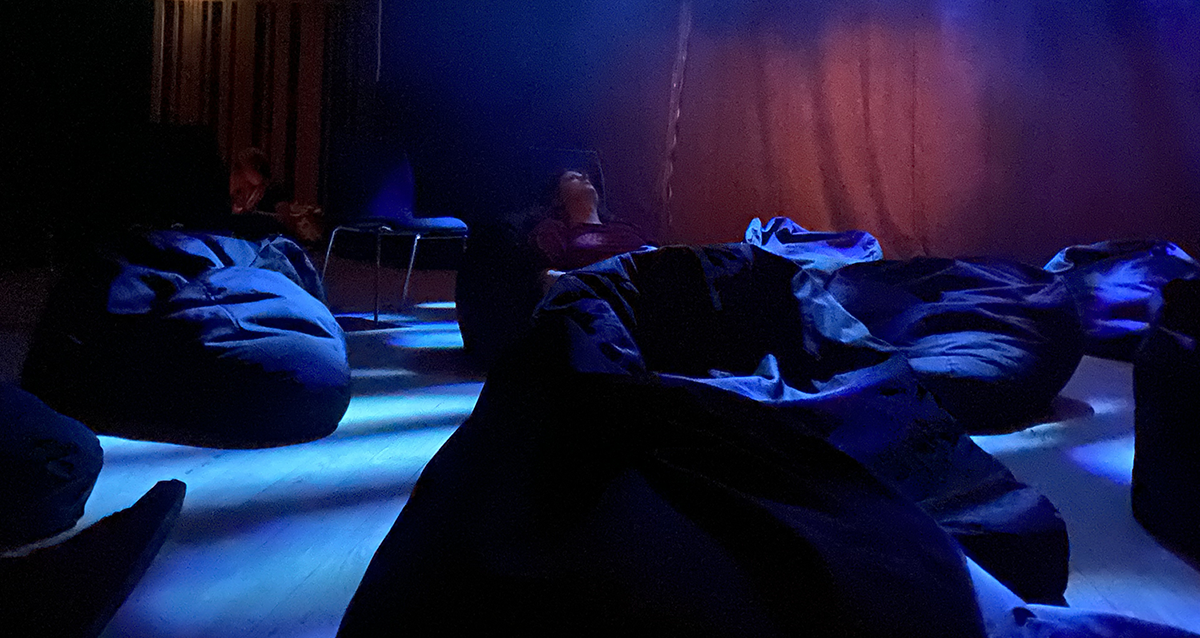
I had been rather dubious about this but felt we had to try everything. However, I was delighted that I had experienced it as it gave a totally new perspective to the live performance – especially as we had moved seats so we were immediately above the orchestra and could watch at close quarters the amazing interaction between all 18 players.
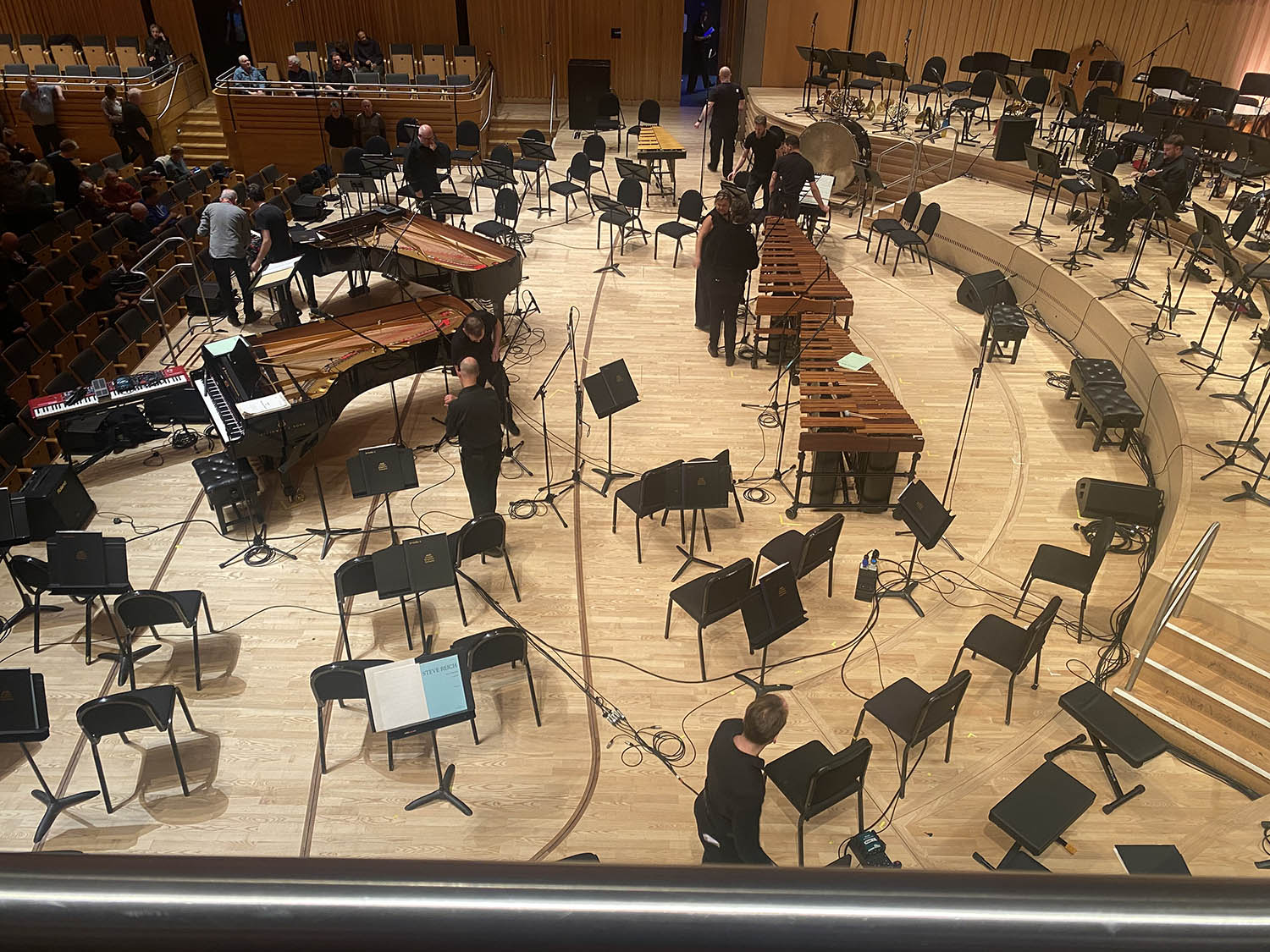
The high point of the last night was Four Sections, a truly massive piece as you can see from the orchestral layout. The work refers to the four sections of the orchestra – first the strings (positively lyrical by Reich’s standards), then the percussion, then the wind and brass and finally the whole orchestra in a massively thrilling finale.
A really brilliant weekend. And if you are now sorry you missed out….. Colin and his group will be playing six Reich pieces at the Barbican on 28th October – more details and to book here.
RNS Moves
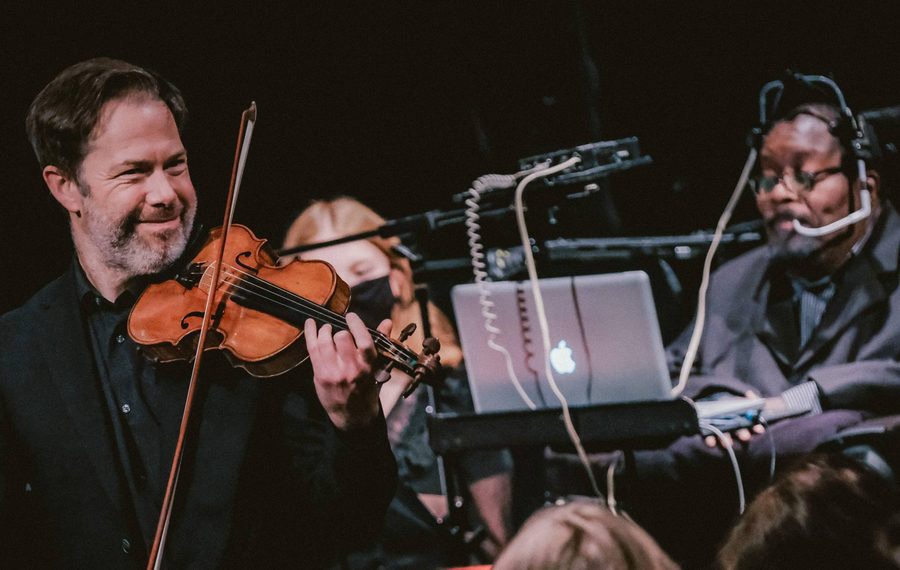
Quite by chance I had, the previous week, been to King’s Place for a concert by the Royal Northern Sinfonia, RNS MOVES for whom the Glasshouse is home.
RNS Moves is a fascinating ensemble made up of disabled and non disabled professional musicians, both players and dancers. They use a combination of traditional and electronic instruments to create ‘music making with improvisation and experimentation at its heart’. Their best known member is probably the trumpeter Clarence Adoo whose trumpet playing career was cut short by a car accident which paralysed him from the neck down; Clarence now plays (by moving his head and breathing into a breath tube) a synthesiser type instrument called Headspace.
However, what is fascinating about RNS Moves is not just the instruments that they play and how they play them, but their approach to what they play. So, for example, in the concert that I saw they played Mozart’s Adagio for a glass harmonica – but they first imagined that the harmonica had been shattered so that the opening phrases were the tinkle of the glass falling to the ground after which they gradually reconstructed the adagio.
RNS Moves lives in Gateshead so I am not sure when will be the next time that we may see them in London, but if I hear anything, I will let you know.
Other up coming events
Sunday 29th November – Highgate Society Lunchtime concert.
Kassa Green-Jakcsi, saxophone, and Diarra Walcot-Ivanhoe, keyboard.
For more info and to book go here.
Thursday 10th December – Hampstead Lane
Nathaniel Mander and his spinet, La Pompadour’s Christmas party. Sold out.
Go here for more details and to join the waiting list.
Monday 11th January – Hampstead Lane
Madeleine Mitchell and her London Chamber Ensemble – Charles Wood and Beethoven quartets.
Go here for more details and to book.
Friday 26th February – Hampstead Lane
Miguel Angel Villeda Cerin plays Bach Cello Suite Number 5 and Kolday’s Sonata for Solo Cello.
Go here to book.
Leave a Reply